
Ready to explore? Grab your crew and see how many of these 13 redwood wonders you can find on a single, easy loop at Henry Cowell Redwoods State Park.
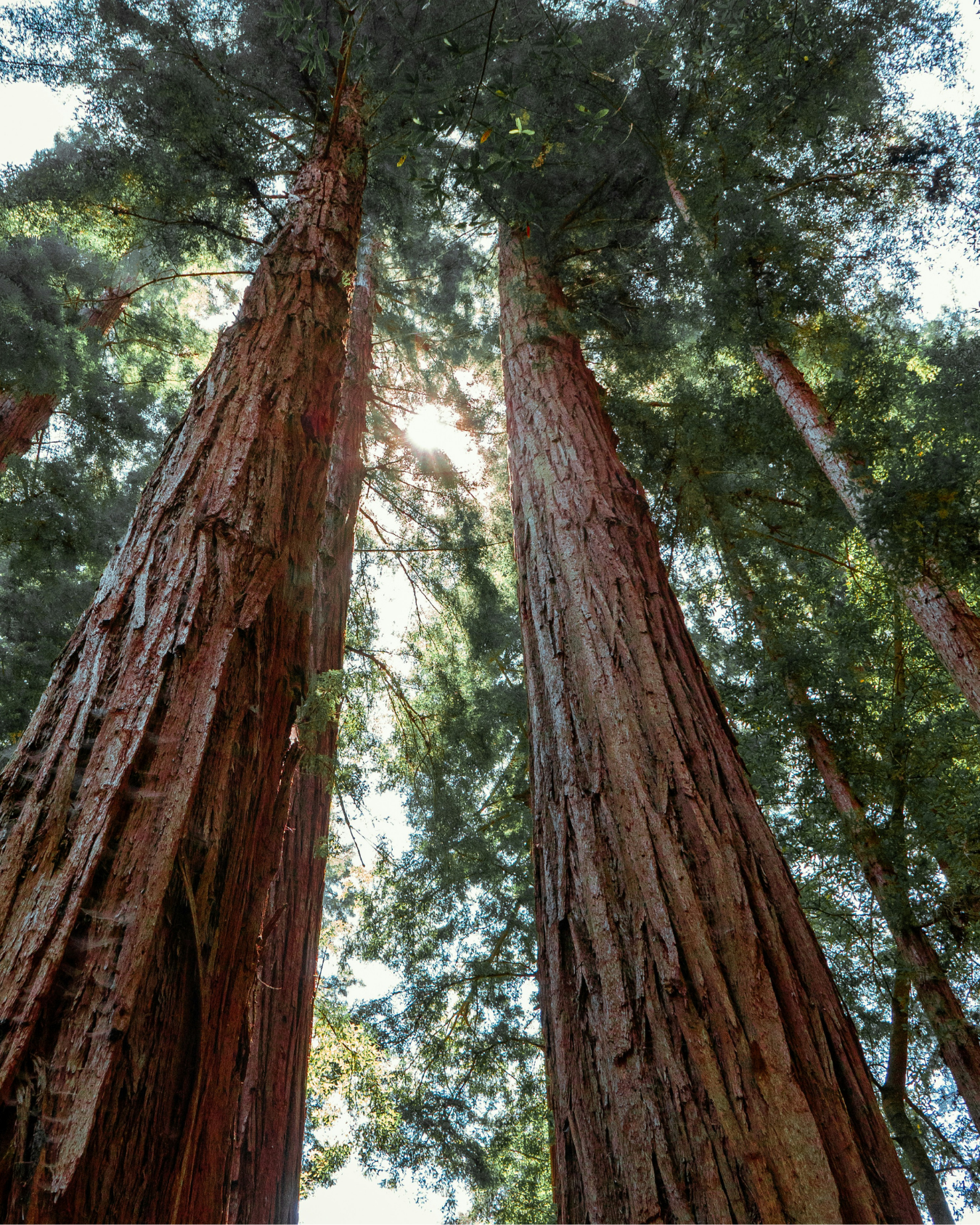
The Redwood Grove Loop is one of our favorite trails to share with first-time visitors. It's flat, under a mile, and packed with surprises: a tree big enough to step inside, a stump pretending to be something it's not, and plenty of bright yellow banana slugs.
The finds are listed in the order you'll come across them walking the loop, so you always know what to look for next. It works for kids, grandparents, first-timers, and anyone who thinks they've already seen it all.
Before You Go: Trail Basics
-
Redwood Grove Loop, Henry Cowell Redwoods State Park, Felton. The trailhead is next to the visitor center and our Nature Store, by the main parking lot.
-
0.8 mile (1.2 km), flat loop
-
About 45 minutes to an hour at scavenger-hunt speed
-
ADA-accessible restroom in the main parking lot; a semi-accessible restroom and drinking fountain about halfway around the loop
-
Day-use parking fee at the park entrance
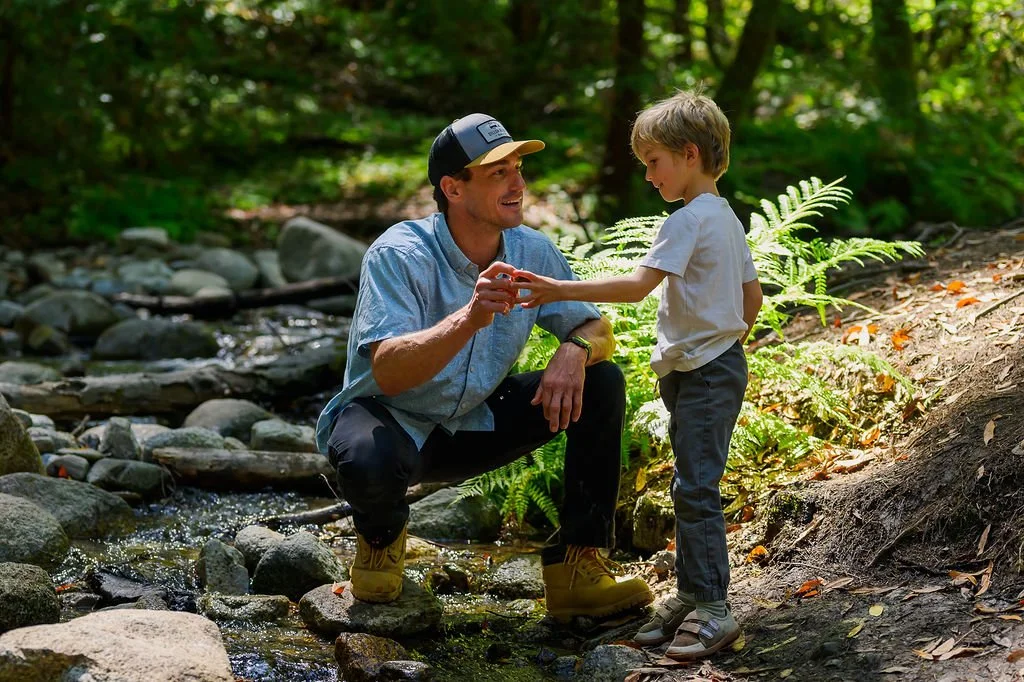
How To Play: Walk the loop and keep an eye out for each find, in order. Check them off as you go and add up your points. Want to go deeper? A free trail guide with more about the grove is available on the California State Parks website.
Bring: comfortable shoes, a phone or camera for photo proof, and a little patience. The best finds go to people who slow down.
Watch For Poison Oak: it has three shiny leaves and grows along the trail edge. Leaves of three, let it be.
The Hunt:
There are 13 finds worth 20 points. Easy finds are 1 point, trickier ones 2, and the hardest 3.
1. Cinnamon bark · 1 point
Find: a redwood trunk the color of cinnamon. Gently press the bark. It's soft and spongy.
Fun fact: Redwood bark can be up to 12 inches thick. Tannic acid gives it that reddish color and helps protect the tree from insects and fire.
2. A fire scar · 1 point
Find: a blackened patch on a living redwood.
Fun fact: No wildfire has burned through this grove in more than 150 years, yet the scars remain. Thick bark insulates redwoods so well that many survive fires that blacken their trunks.
3. The impostor · 2 points
Find: a stump that isn't a redwood at all. It's a Douglas fir.
Fun fact: Douglas firs are the forest's "other tall tree," reaching about 250 feet and living around 500 years. Compare its hard, furrowed bark to the soft bark of the redwoods around it.
4. A family circle · 1 point
Find: a ring of redwoods growing in a circle.
Fun fact: These trees sprouted from the base of a larger parent tree that once stood in the middle. They're clones, which makes them the closest family on the trail.
5. A nurse log · 2 points
Find: a fallen redwood with new plants growing on or around it.
Fun fact: Redwood roots go only 6 to 12 feet deep but spread 60 to 80 feet out from the trunk. When a redwood falls, it becomes a nursery for the next generation.
6. The Giant · 1 point
Find: the biggest tree in the park. You can't miss it.
Fun fact: The Giant is about 282 feet tall, more than 17 feet wide, and weighs roughly 400 tons. Bonus challenge: find a redwood cone on the ground nearby. It's only about the size of an olive, yet holds 60 to 120 seeds.
7. The Frémont Tree · 2 points
Find: the hollow redwood big enough to step inside. Watch for the sign about halfway around the loop, then go in and look up.
Fun fact: Legend says explorer John C. Frémont camped inside this tree in 1846. When asked about it years later, he reportedly said, "It makes a great story, let it stand."
8. The bay tree sniff test · 1 point
Find: the California bay laurel. Pick up a fallen leaf, crush it, and take a sniff.
Fun fact: California bay leaves are about three times stronger than the Italian bay leaves in your kitchen. Indigenous peoples used its nuts to make flour and a coffee-like drink.
9. A gap in the canopy · 1 point
Find: a spot where sunlight pours through an opening in the treetops. Look up.
Fun fact: These gaps let extra light reach the forest floor, creating small habitats for plants and animals that need more sun.
10. A burl · 2 points
Find: a big, bumpy knot growing on a redwood trunk.
Fun fact: Burls are masses of dormant tissue that can sprout new roots or shoots. Look for fire scars on this tree too. It's been burned at least once and kept on growing.
11. A banana slug · 3 points
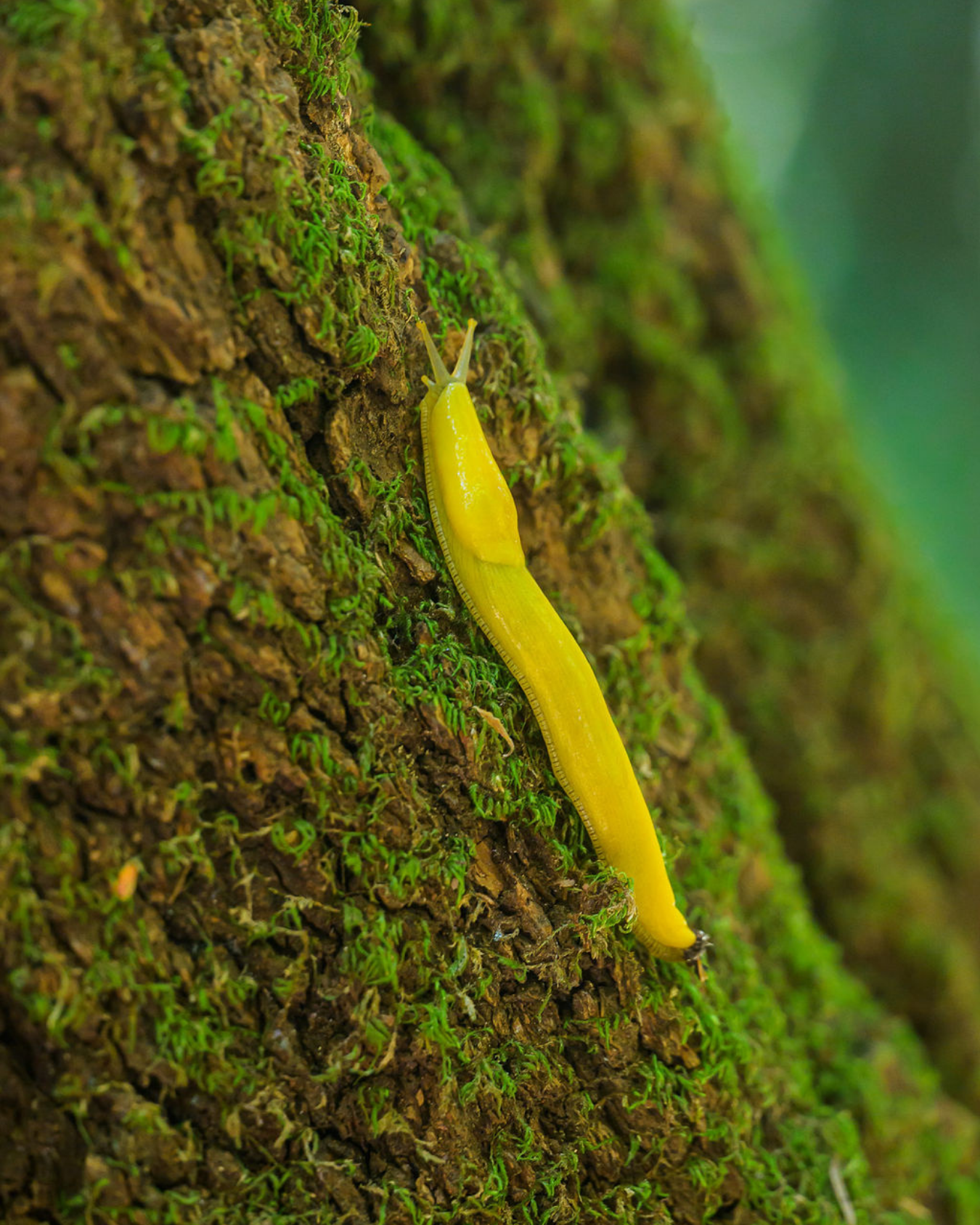
Find: a bright yellow banana slug. Check damp spots, under redwood sorrel, and along fallen logs.
Fun fact: Banana slugs can grow up to 10 inches long, and they help recycle nutrients back into the forest. In warm summer months, they hide underground and in rotting logs, so you're more likely to spot one on a cool, damp day.
12. A baby redwood · 2 points
Find: a young sprout growing from the base or roots of a bigger redwood.
Fun fact: Only 5 to 10 percent of redwood seeds ever sprout. Most new redwoods start as sprouts from an existing tree's roots or base instead.
13. A living fossil · 1 point
Find: the slender dawn redwood, a close cousin of the coast redwood.
Fun fact: Scientists thought dawn redwoods were extinct until they were rediscovered in China in the late 1940s. Just before you reach it, look for the Jeter plaque on your left. It honors William T. and Jennie Jeter, who helped protect this grove.
Bonus Finds
Finished the loop? These extra finds are worth 9 more points, for a perfect score of 29.
The hidden hummingbird (3 points): Just outside our Nature Store, an illustrated Anna's hummingbird sign is tucked among the California fuchsia. Most visitors walk right past it.
Redwood sorrel (1 point): Look for the clover-like plant carpeting the forest floor. Its heart-shaped leaves fold up in bright sunlight.
The train whistle (2 points): The grove sits beside a working railroad. Listen for the whistle of a steam train rolling through the redwoods next door at Roaring Camp.
Forest sounds (1 point): Stand still for one full minute and listen for a Pacific wren's song or a western gray squirrel chattering overhead.
The dawn redwood's twin (2 points): Another dawn redwood, planted the same day as the one on the trail, grows near the park entrance kiosk. Spot it on your way in or out.
Hunt Like A Good Neighbor
The best scavenger hunters leave the forest exactly as they found it.
Stay on the trail. Redwood roots are shallow, and trampled soil around a tree's base can harm it.
Photos only. Snap a picture as proof instead of taking cones, leaves, or bark home. Fallen leaves for the bay sniff test are the exception, and they stay in the forest.
Let slugs be slugs. Admire banana slugs without touching them. Their skin is sensitive, and lotion or sunscreen on your hands can hurt them.
Pack it out. Anything you bring in goes home with you.
How Did You Do?
Score And Your Title:
1–10 points: Trail Sprout
11–19 points: Redwood Ranger
20–28 points: Grove Guardian
29 points: Redwood Legend: you found it all!
Share your finds. Post your favorite photo from the hunt and tag us @mountainparksfoundation. We'd love to see your Giant, your banana slug, and especially your hummingbird.
Stop by our Nature Store. It's right by the trailhead, with field guides, kids' books, and banana slug souvenirs to celebrate your score. Every purchase supports education and interpretive programs at Henry Cowell and Big Basin, including the trail guides and interpretive signs that help visitors learn about the grove.
Keep exploring. Ready for more? Visit mountainparks.org to find park programs, volunteer opportunities, and ways to support the redwoods you just explored.
Sources